
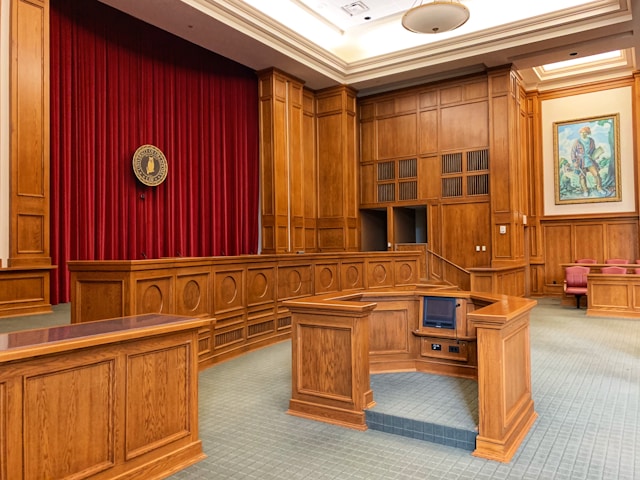
It is quite common for individuals to represent themselves in court proceedings when permitted by law. The high cost of hiring an attorney often leads many litigants, especially in civil matters, to proceed without legal representation. Certain types of cases, such as landlord-tenant disputes or small claims matters, are generally more manageable for self-represented, or pro se, parties. However, despite the right to self-representation, courts frequently treat attorneys and pro se litigants differently in the management of their cases, which can create an appearance of unfairness.
In many courtrooms, clear distinctions are made between represented and self-represented parties. For instance, in some landlord-tenant courts, attorneys are instructed to sit in the jury box, while pro se litigants are directed to sit in the area reserved for the public. The jury box is often more comfortable and physically closer to the judge, which may appear as preferential treatment toward attorneys. Yet, there are practical reasons for such separation. Courts often need to easily distinguish attorneys from pro se litigants, as business entities are not permitted to represent themselves in certain proceedings. Additionally, separating lawyers from pro se parties may help reduce tension or potential confrontations between opposing sides.
Another area where differences arise is the order in which cases are heard. In some courts, cases where all parties are represented by counsel are prioritized over those involving pro se litigants. Judges often justify this by explaining that it minimizes the billable time clients must pay their lawyers for waiting in court. Moreover, allowing lawyers to finish their cases earlier enables them to return to their offices and attend to other clients, arguably improving judicial efficiency. However, this system can be frustrating for pro se litigants, many of whom must take unpaid time off work to attend court. Their time holds value as well, and the preferential scheduling of cases involving lawyers can understandably feel inequitable.
Courts also handle conferences differently based on representation. When all parties are represented, discussions often occur in the judge’s chambers. In contrast, when a pro se litigant is involved, the conference typically takes place in open court—perhaps due to security concerns or a desire for transparency. Nonetheless, this difference may be perceived as favoritism toward attorneys. Standardizing these procedures could promote fairness and transparency in judicial proceedings.
While courts likely have legitimate operational reasons for treating pro se litigants and attorneys differently, such distinctions should be carefully evaluated. Judicial systems must remain aware of how these practices appear to the public an